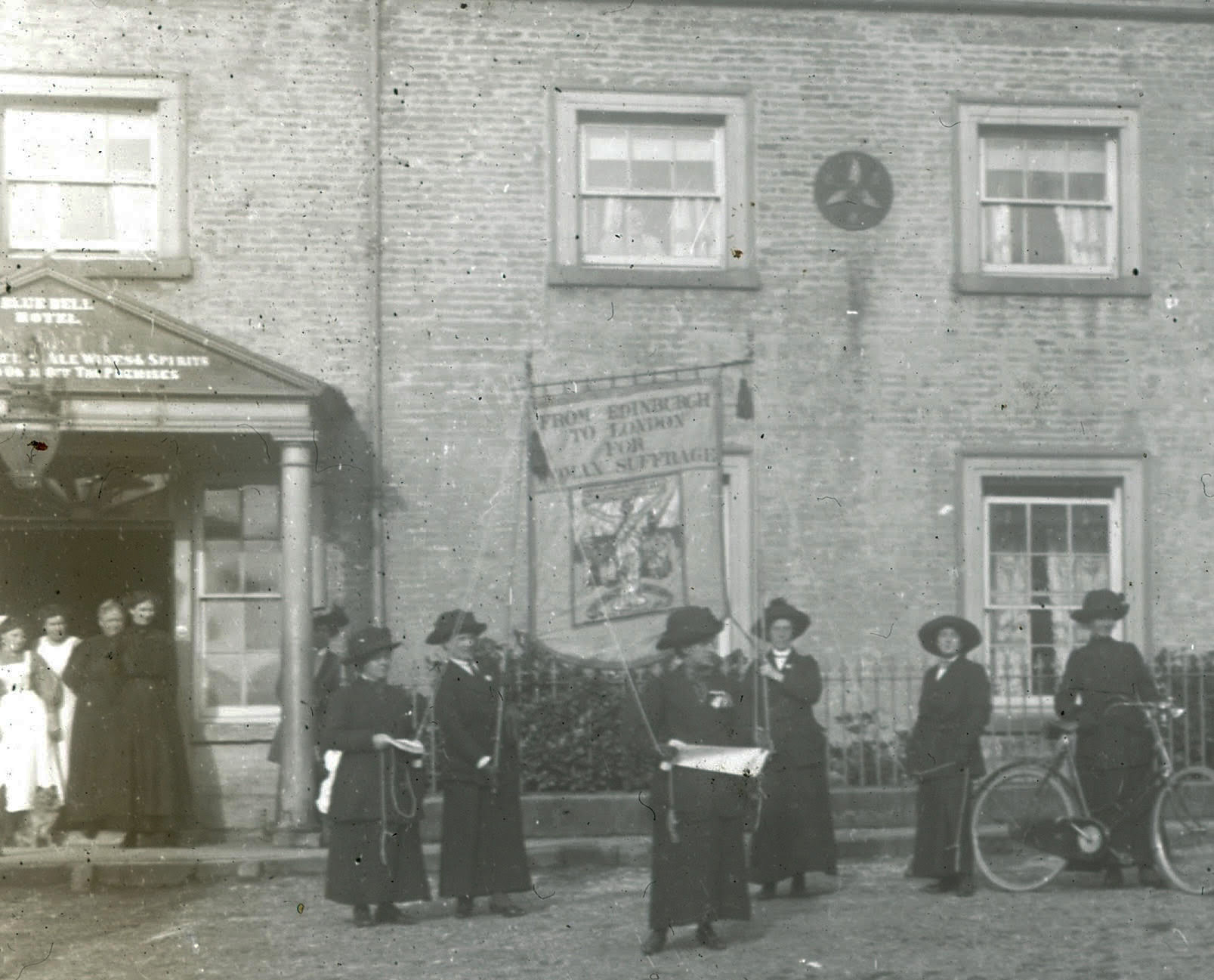
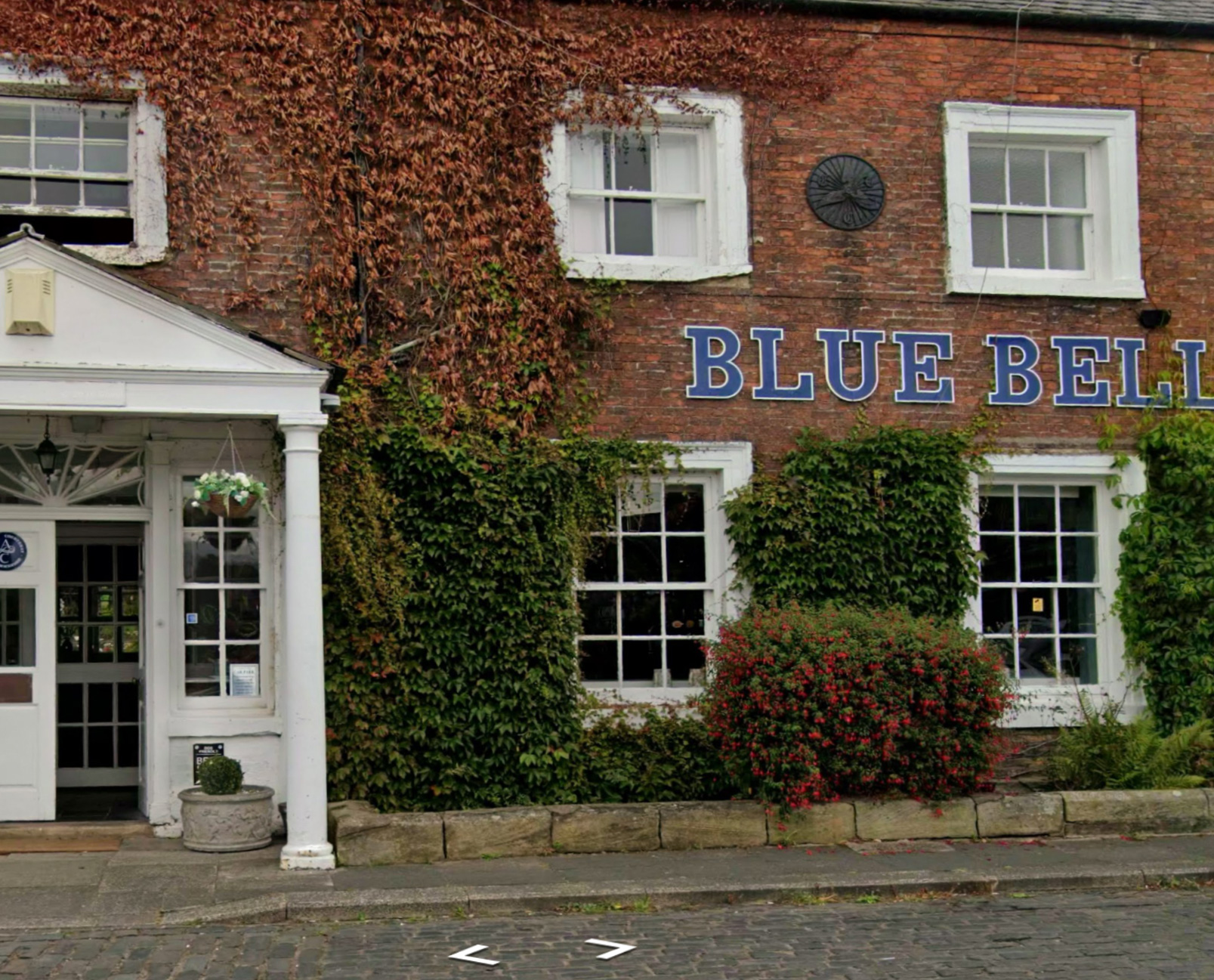
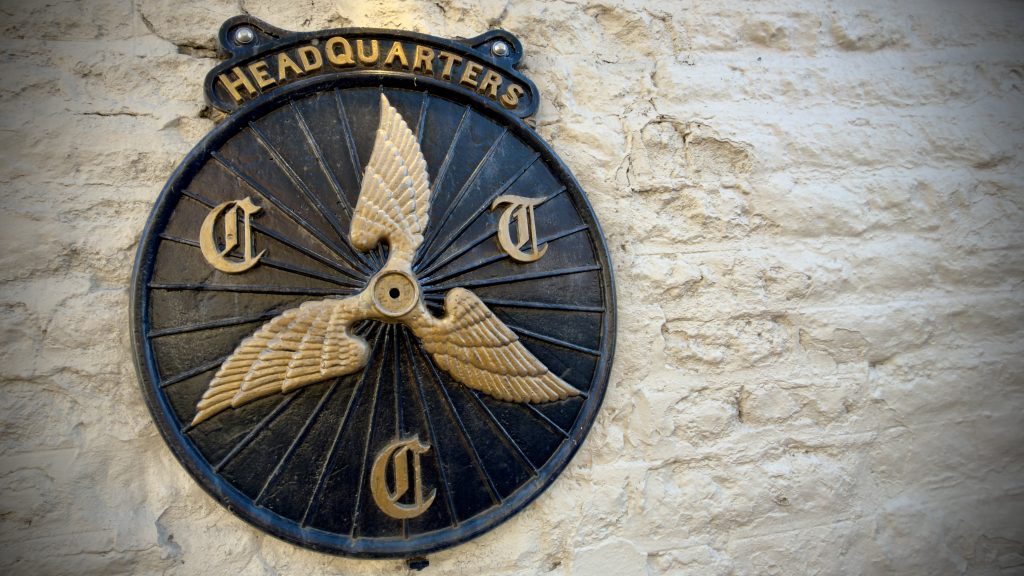
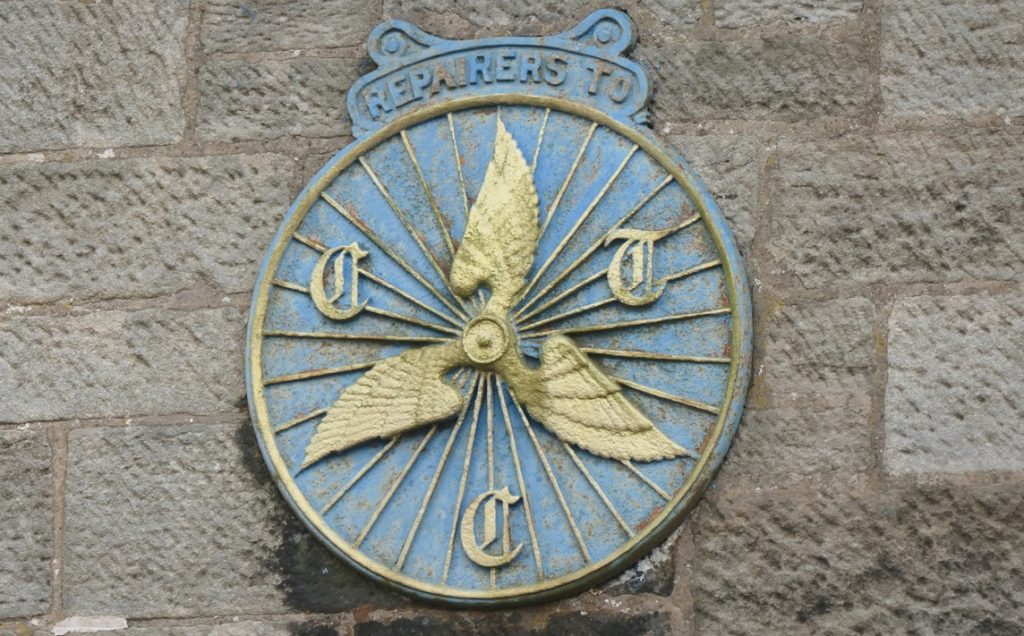
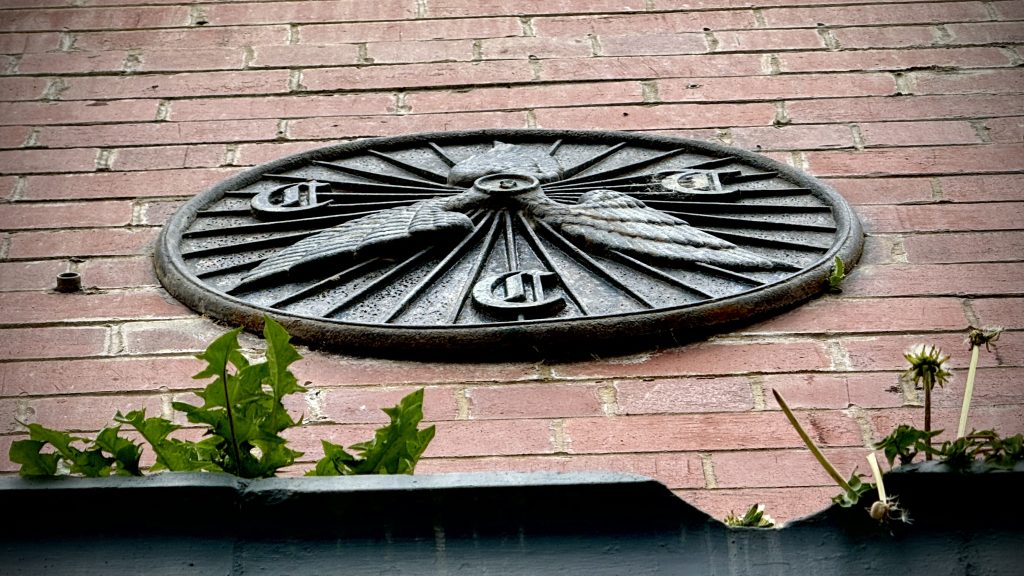
Many inns, hotels, shops, private houses and other buildings across the UK and Ireland sport roundels featuring three wings interspersed with the medieval-style letters “C,” “T” and “C” within a spoked wheel. These are historic recommendation plaques — pre-dating by 33 years the now-commonplace star-rating system the Automobile Association introduced in 1912.
The plaques were loaned by the Cyclists’ Touring Club (CTC) founded in 1878. Within a decade the CTC — now Cycling UK — had 22,000 members, making it the largest athletic club in the world. It therefore made sound business sense for pubs and hotels to sport the “winged wheel” signs, flagging that they were CTC-approved.
And CTC members frequented these establishments because CTC members benefitted from discounted rates for refreshments and accomodation. By 1899 the CTC had 60,449 members including notable authors, leading scientists as well as significant members of the nobility, royalty and armed forces. By comparison, in 1903 — the year of the Motor Car Act which introduced motor vehicle registration and driver licensing — the Automobile Club, soon to get the royal stamp of approval and become the RAC, had only 3,008 members.
It’s a sign
The first cast iron signs were produced in 1888, two years after the CTC shamelessly copied the logo of its American sister organisation and the year after the CTC became an incorporated body and therefore able to protect its purloined logo.
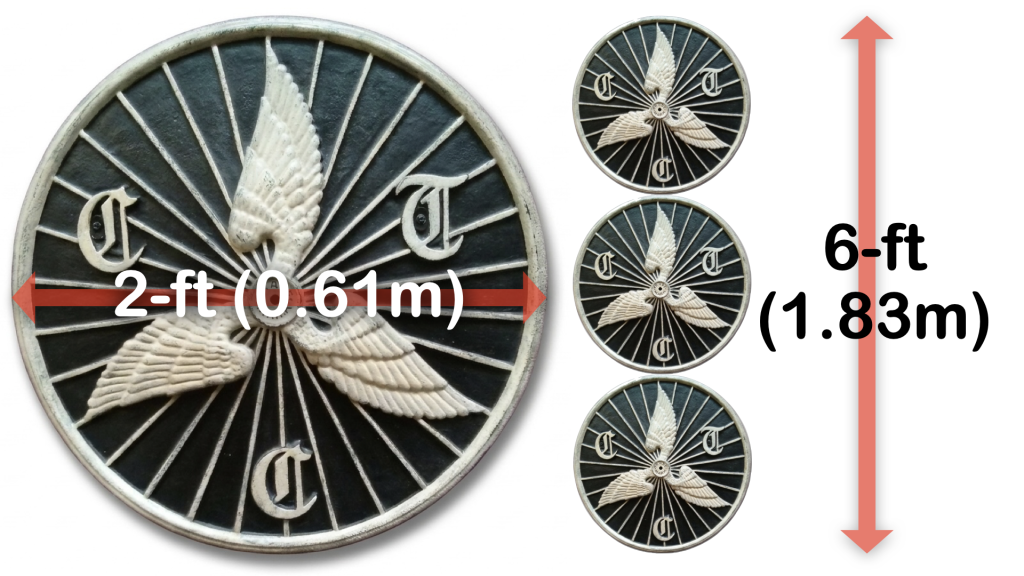
The club duly introduced several types of plaques, including 2-ft-wide cast iron roundels that marked out an establishment as a “HEADQUARTERS” or “QUARTERS” for members. These two designations — cast into the relevant signs — were best/good epithets and were issued depending on the facilities available to members such as cycle storage or a map repository or a club noticeboard or a dark room for “cyclo-photographers” (cycling had a strong, symbiotic relationship with photography). But more than anything, the cast iron signs were issued to those establishments that offered club-specific discounts from the standard bill of fare; typically, a Headquarters would offer a more attractive level of discount than a Quarters. The CTC stipulated set discounts for standard meals and accommodation grades.
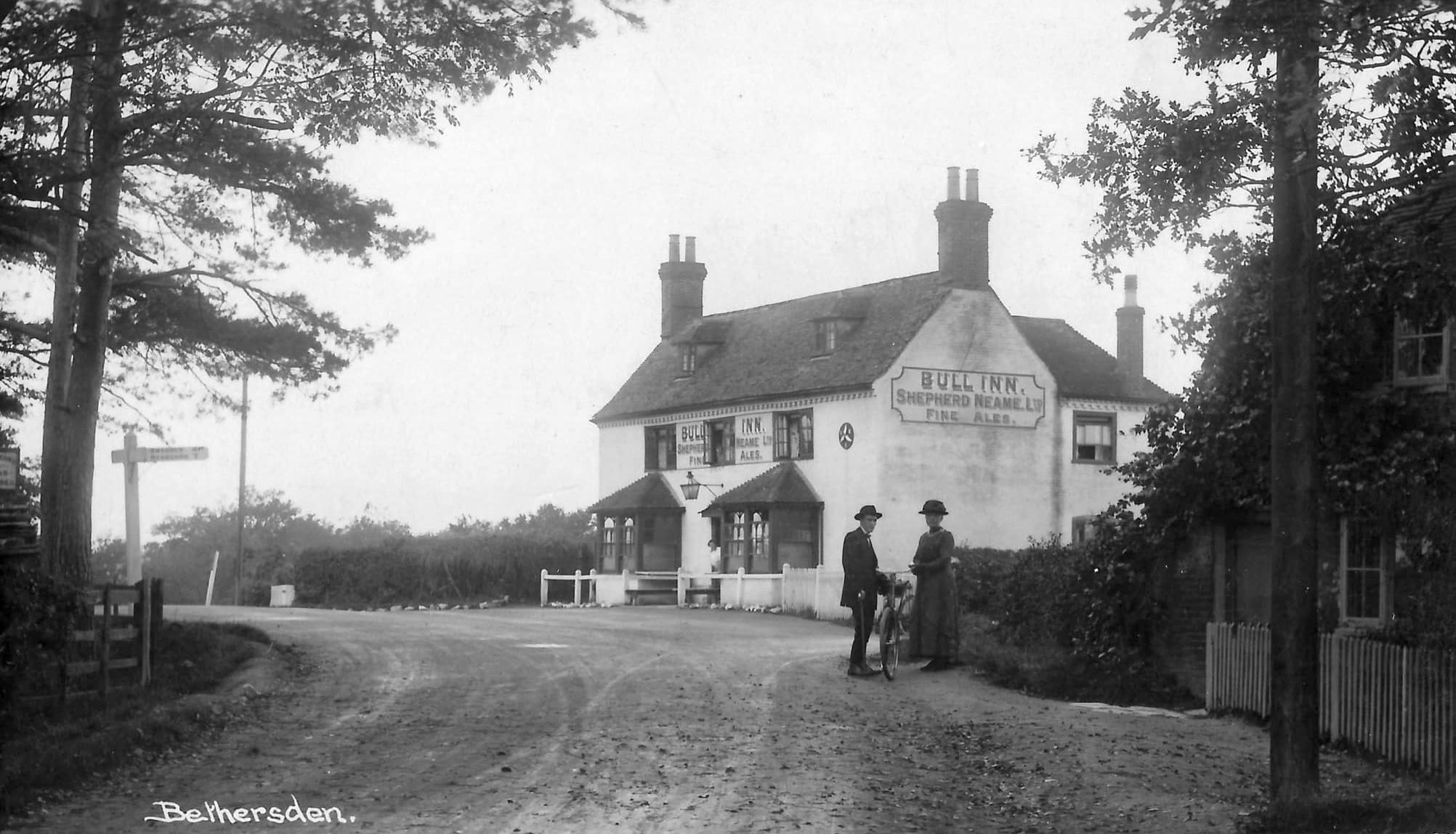
Being a Headquarters didn’t mean that an establishment was a base for local CTC members. Instead, like the Quarters, it was a destination, contracted to provide discounts and amenities for those who flashed their CTC membership medallions or cards. “If properly and judiciously applied,” explained the CTC Monthly Gazette, March 1887, “this contract results in a saving to our members of from 10 to 20% from the ordinary coffee-room tariff, a concession not to be despised.”
The best/good designations were dropped in 1895 and after that only plain cast iron signs were issued, but establishments still had to offer set discounts.
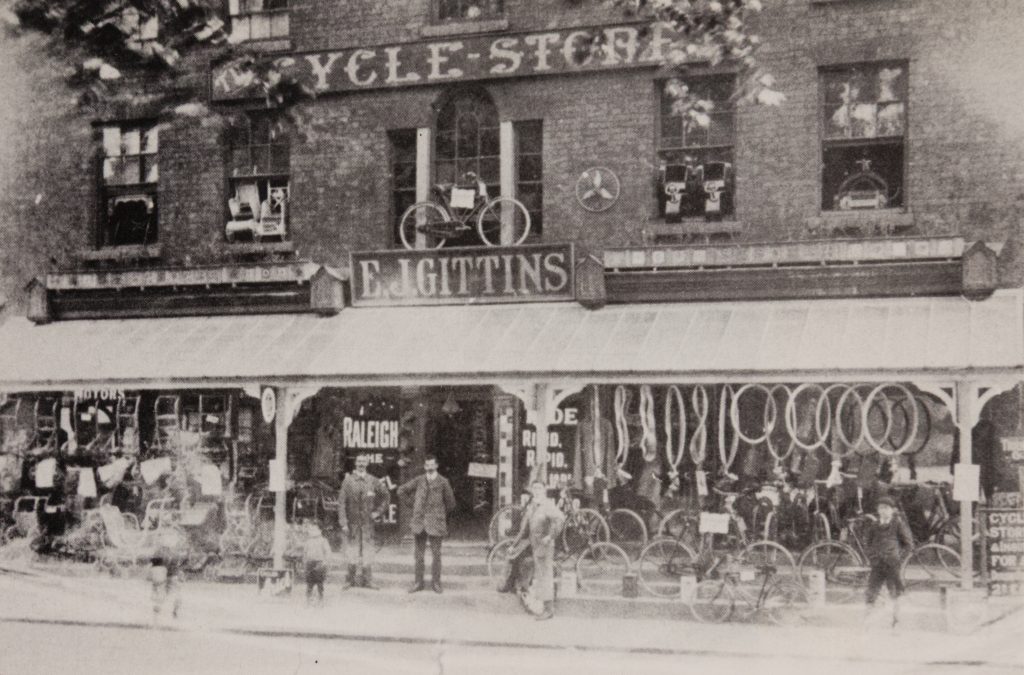
Cast iron plaques were also issued to cycle repairers. These were standalone bike shops or more often smithies, ironmongers or coach builders with a sideline in cycles. Above the CTC motif this sign featured the words “REPAIRERS TO.”
In the 1884 CTC Handbook, the club recommended 782 repairers and 1,399 refreshment stops. By 1889 — the year after the first cast iron signs were issued — the Handbook listed 814 repairers and 2,095 refreshment stops, consisting of 369 coffee taverns, 236 Temperance Hotels, 981 Headquarters and 509 Quarters (the HQs and Qs were almost all in former coaching inns).
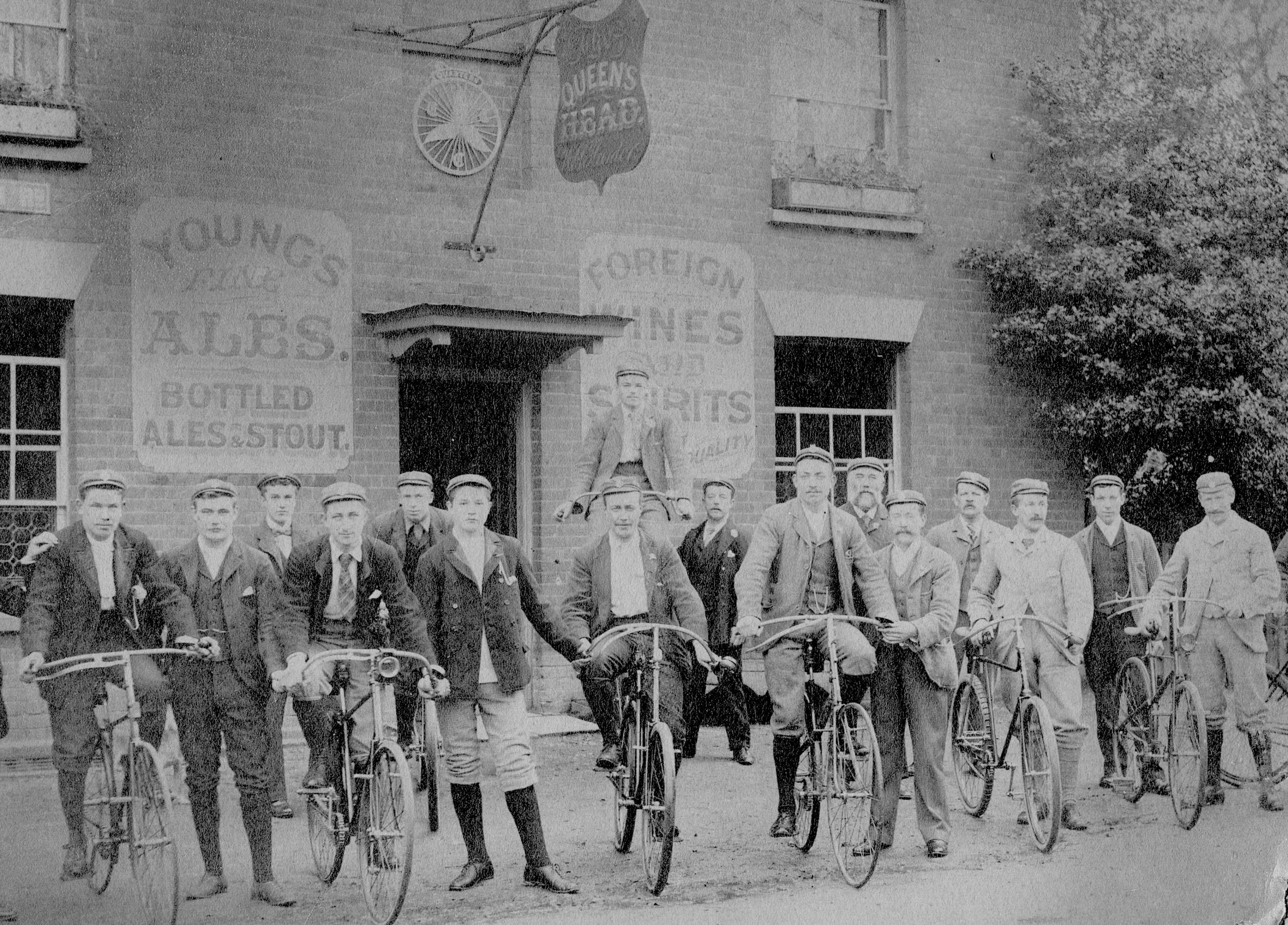
Of the 1,490 or so hotels and inns recommended in the CTC Handbook for 1887, there were 318 which said they provided dark rooms for use by cyclists. This was the first time the annual publication had listed such facilities for pedalling photographers and the concept of a national list was copied the following year by The Amateur Photographer. AP’s list added hotels in 1890 which was “compiled to a great extent from that excellent publication, the C.T.C. Handbook,” admitted the magazine. (June 27th, 1890).
The CTC Handbook for 1889 listed 871 Consuls — these were volunteers who made themselves available to fellow members to “be a guide, philosopher, and friend to visiting club-men,” stated the CTC Monthly Gazette for March 1887. The Consuls also helped to recommend approved hotels and inns for listing in the annual Handbook. (Thirty-five of these Consuls were Reverends.)
Consuls were also expected to mark up Ordnance Survey maps with road surface information and other measurements. These master maps would be held in HQs and Qs for perusal by CTC members. Starting in 1898, the CTC had a formal relationship with Messrs Bartholomew, an Edinburgh-based map publisher, for the provision of data. This was an astute move – cyclists were prolific, well-travelled tourists and, out of necessity, mad keen on maps. In return for road intelligence from its Consuls and members, the CTC was provided with discounted maps. The crowd-sourcing enabled Bartholomew to update its maps every couple of years, unlike the slower-moving, state-owned Ordnance Survey, which relied on methodical surveys by its own staff. The first of Bartholomew’s crowd-sourced maps was the CTC half-inch map by Messrs Bartholomew & Co released in 1900. A “tourist and cyclist” map of the Lake District, followed in 1903.
“Within ten years the Club had twenty-two thousand members — the largest athletic club in the world.”
The Cyclists’ Touring Club, founded 1878
Even though the cast iron plaques were ostensibly the property of the CTC — and could be removed for any supposed commercial transgressions — the fact they were often placed high up on a building (one is still on a roof chimney) has meant many still survive in situ, long after the cessation of CTC’s quality assurance scheme.
And because they’re usually affixed so high it can be a surprise, when you get close, to see how large they are. Three of them on top of each other would be the same height as a person 6-ft (1.83m) tall.
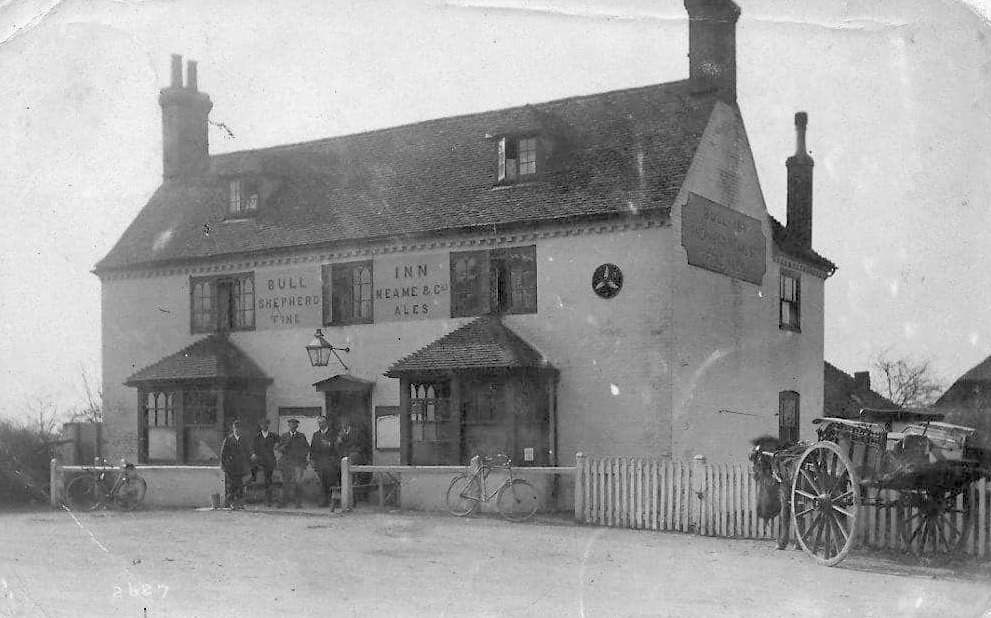
Some of the cast iron plaques were painted over and can be hard to spot; others have been faithfully restored in the original black-and-white colour scheme (several have been painted in vivid, non-period colours); one is upside down.
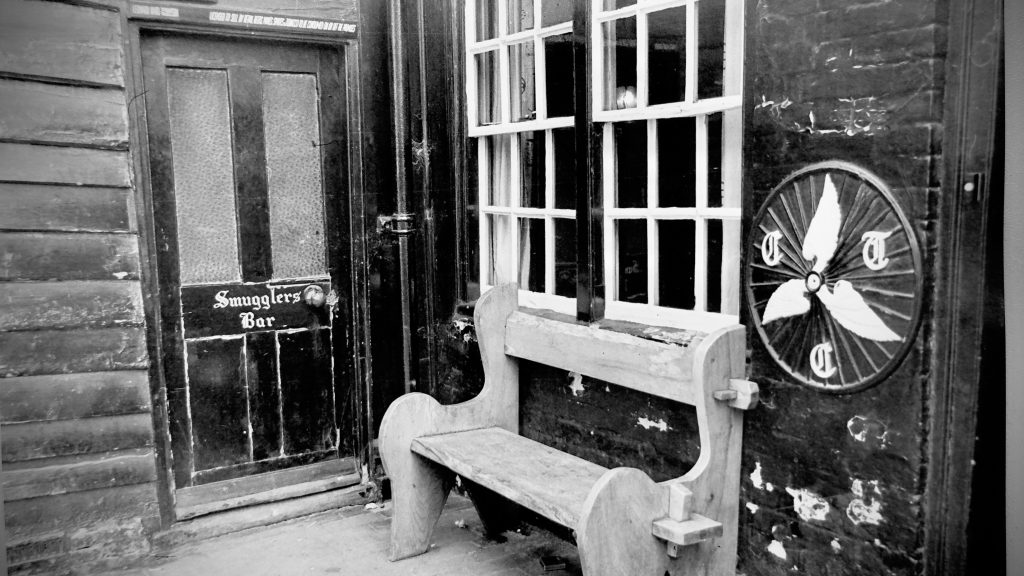
Many of the inns and hotels are still inns and hotels although some look worse for wear. A few are now boutique hotels; one is now a bespoke jewellery shop; another is an Indian restaurant. According to an official heritage listing for one former hotel the CTC roundel is described as a “clock.”
The period CTC cast iron roundel on Bourton on the Water’s picturesque Old New Inn is not only still in situ but there is also a painted version of the sign on the 1:9 scale model of the inn in the adjacent Model Village, built 1936-40.
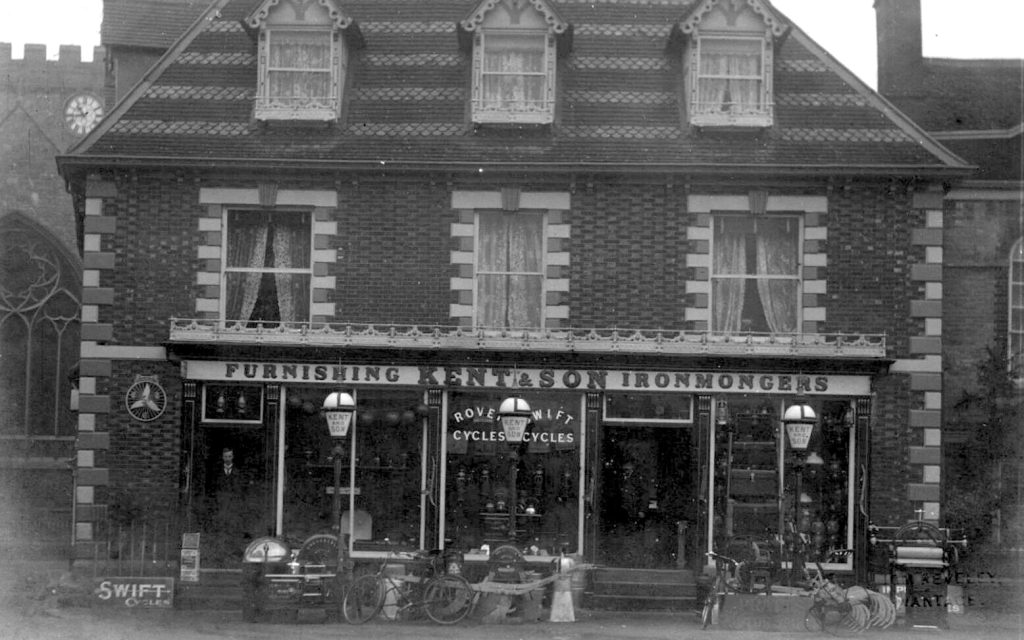
None of the period bike repairers with signs are still in business. One is a barbers shop, another is a florist, and a long-time bike shop is now a bedding business while a large Raleigh shop and distribution hub in Liverpool is now a PanAsian restaurant and bar. Twelve of the properties with period signs are now private houses.
Some of the properties with plaques are listed buildings and it’s therefore probable that the period signs should remain; the signs on those buildings that are not listed could be removed at any time.
Not all of the 2,909 businesses listed in the 1899 CTC Handbook will have been issued with club signage so it’s not possible to state how many signs were ever affixed. Today, there are 150 or so period signs still in situ. Several have disappeared only just recently, such as the missing one in Bala which has a tell-tale mark where the 2-ft sign would have been.
The CTC stopped producing the large, heavy and expensive cast iron signs before 1914, and after 1918 started issuing cheaper, flimsier 16-inch-wide copper embossed square signs. Later still, the CTC issued even cheaper circular enamel plaques.
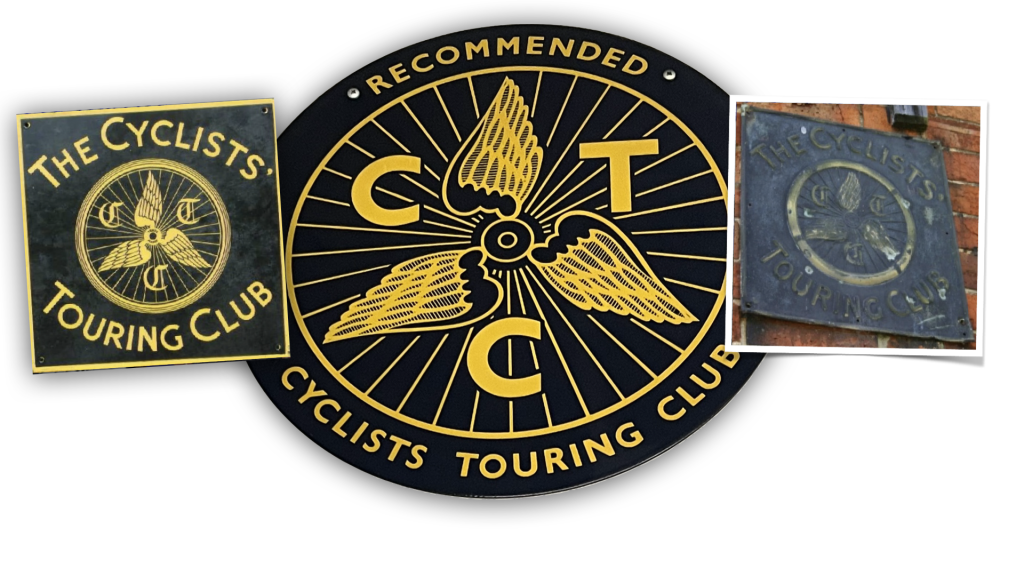
Previously this website included signs spotted in museums and so forth but now only in situ signs are listed. Presumably these are in their original positions — a key reason many have survived is that the 2-ft-wide cast iron signs in particular were attached securely, their bolts have fused to walls and it’s difficult to remove them. The square and circular enamel plaques were always more ephemeral and are usually now not so well preserved, nor were they attached as semi-permanently as the cast iron signs.
A few examples of the enamel signs — such as one at Cycle Inn of Beeston — have been displayed inside since the 1930s so have remained in pristine condition.
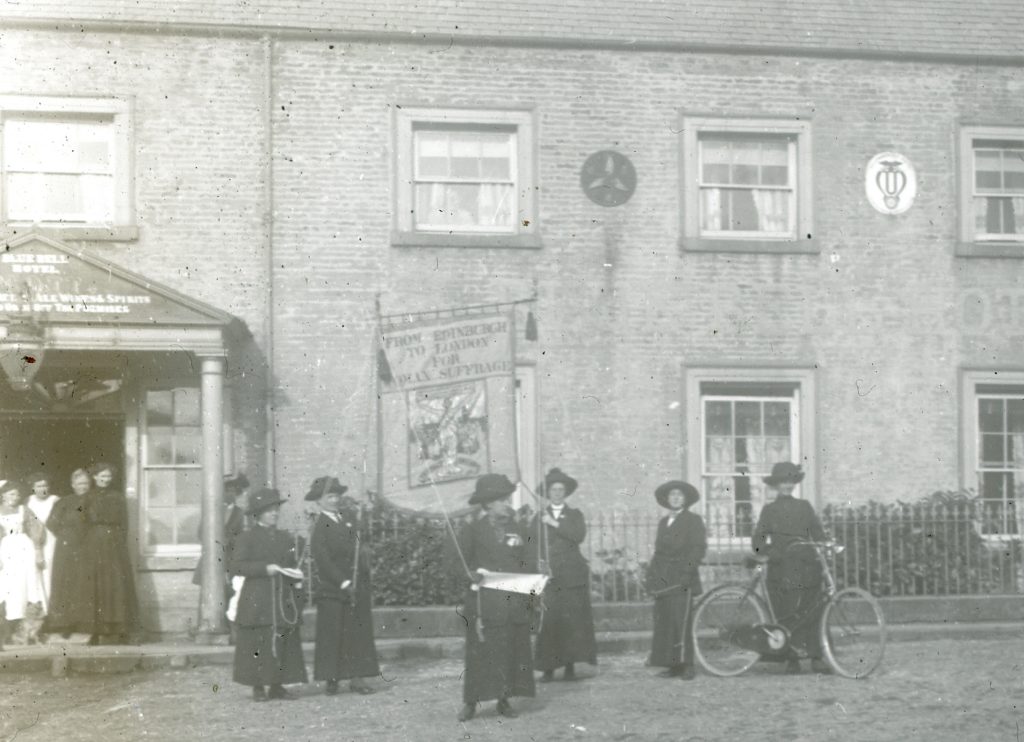
Where period display cannot be proved, the signs have not been included on this website or map. Non-period reproduction enamel signs are in circulation, and some of those may have ended up in museums. There are also several glass-fibre replicas of the cast iron signs on the exteriors of buildings and where the history of these are known details are included here. A few locations are interesting enough to include even though the period signs — or the premises they were once attached to — have disappeared.
Verification
This website builds on decades of dedicated work. Wessex CTC member Keith Matthews created wingedwheels.info in 2001, drawing on databases compiled by Karl Briggs and Edward Zoller in the early 1990s.
Through appeals in the cycling press Matthews received periodic submissions from sign spotters around the UK and Ireland; their names have been retained on the property details.
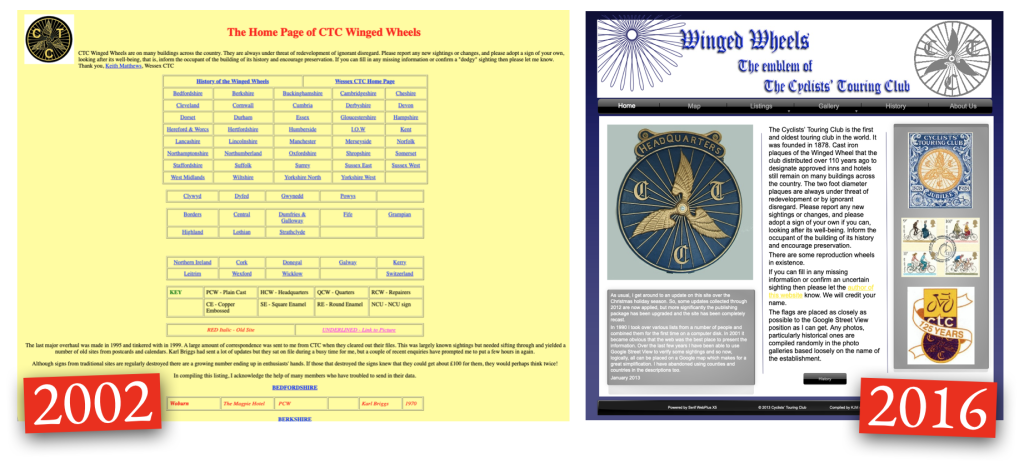
The Winged Wheels website — no longer a dot.info — is now run by the Cycling History and Educational Trust.
The text for this updated version of the website is by historian and journalist Carlton Reid.
As the period properties were located on (often main) roads used by cyclists of the day it has been possible to verify the signs still in situ via Google Streetview. Only a couple of locations — including the Imperial Hotel in Stanley — are now on pedestrianised streets and inaccessible to the Streetview car. The owners of at least one of the properties has requested their now private house to be blurred in Streetview and it therefore proved impossible to verify whether a sign was still affixed.
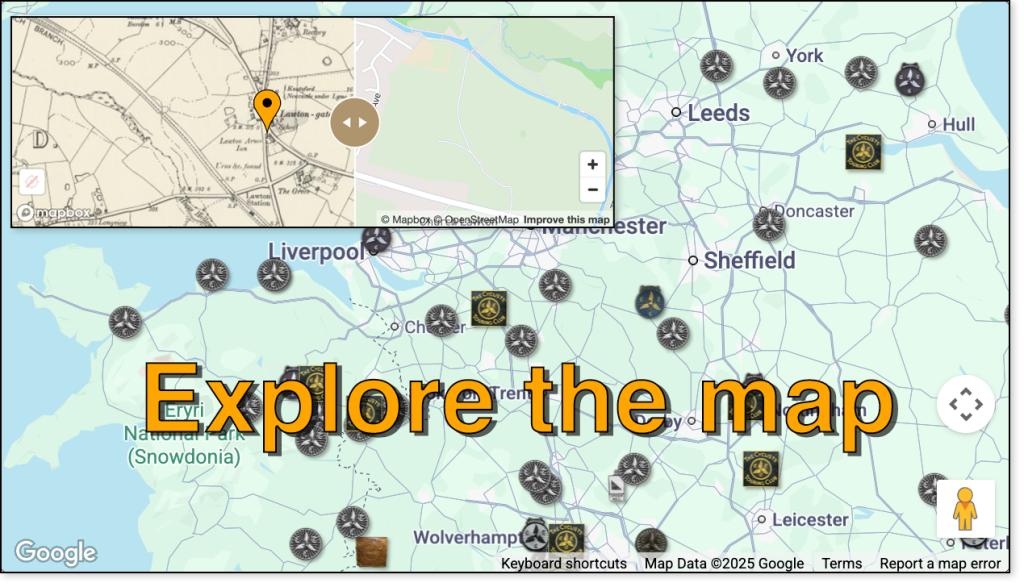
The heart of this new website is the clickable, zoomable map of all known sign locations. Want to ride to see some? Use the “get directions” link for cycle-specific routing. Thanks to James Houston for the clever map work and coding.
And thanks to Bob Downie, Sam Franklin and Linda Cottrell for trawling through the 1889 CTC Handbook and checking the geolocations for all of the 2,000+ period establishments listed; their careful work has enabled the map to be as accurate as possible. Data from other handbooks will be added in the fullness of time, giving a rich picture over time of which establishments period cyclists visited.
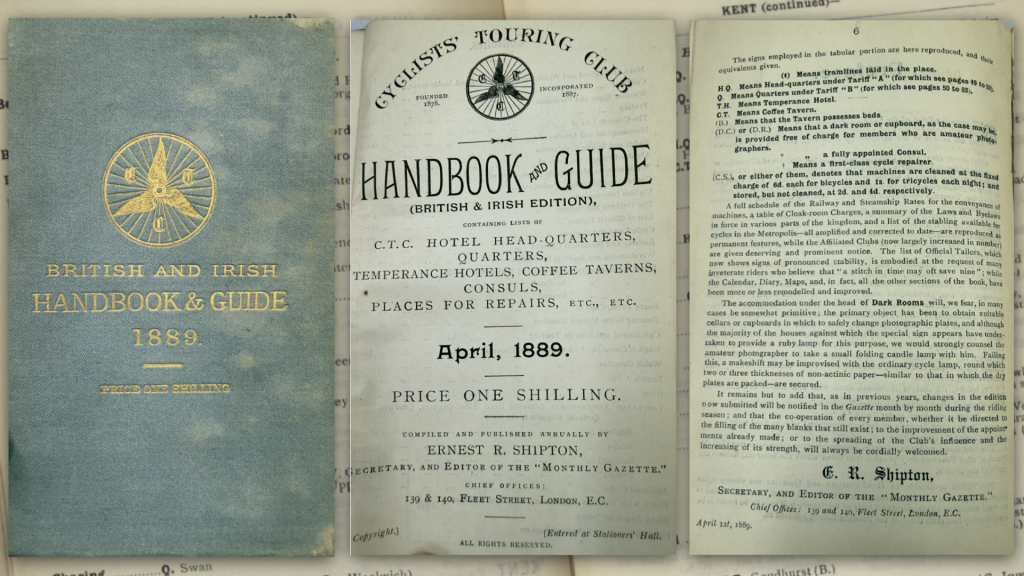
The handbooks — published annually for 120 years or so — contain a wealth of data, ripe for further research, but it has to be admitted that even the best of them are imperfect. While many of the inns are still inns, and usually with the same name then as now, and are therefore relatively easy to locate, many of the other establishments — especially the repairers — cannot be geolocated with certainty.
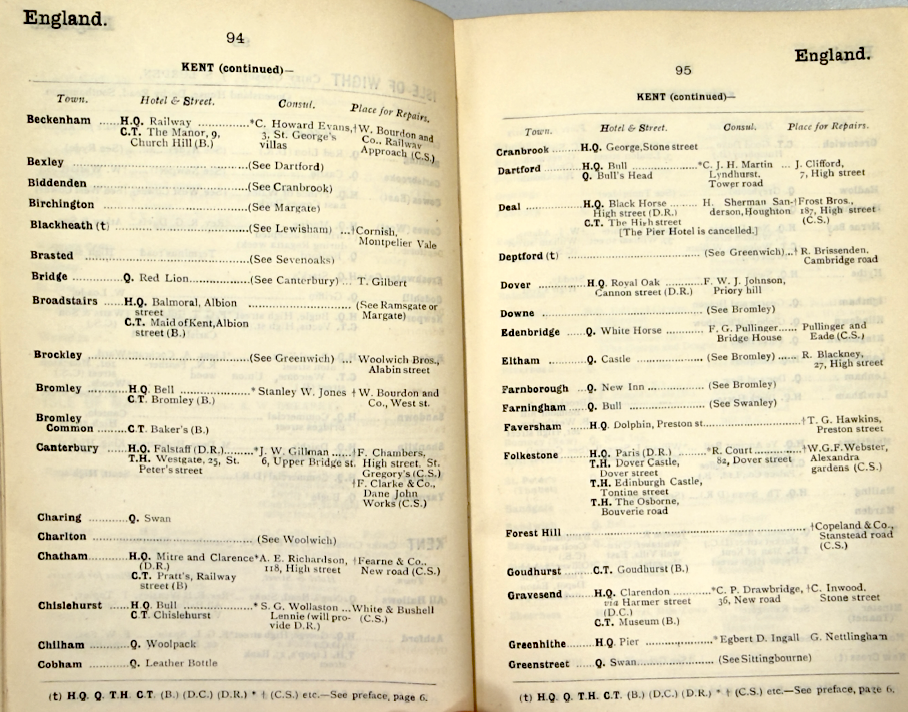
While many of the locations are frustratingly unintelligible to us today it was probably the same for the original audience. Some of the locations would have required asking a local for their whereabouts as you arrived into town. This was probably due to a bit of hubris — “everybody know where’s Bill’s place is,” for instance — through to imprecise data collection by CTC officials at the time who were likely provided with duff information from some establishments.
Volunteer consuls were the CTC’s local representatives and most were diligent intelligence gatherers. However, some were better than others, and there are period gripes from CTC officials in councillor-only communications complaining that certain consuls were not as helpful as they could be.
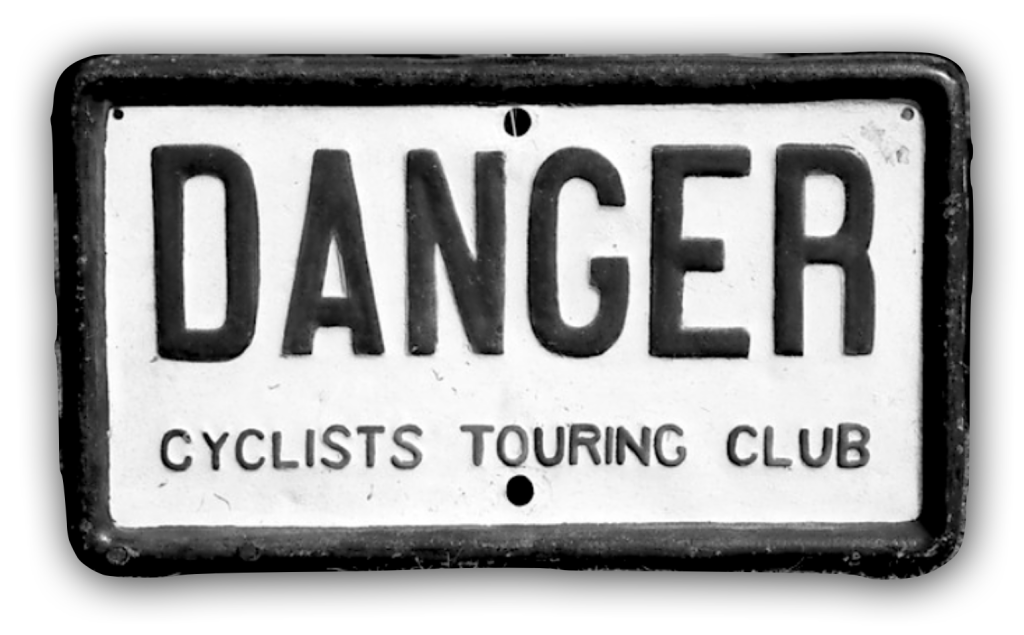
Caution signs
In addition to the hotel signs there’s also some information on this website about the CTC’s period warning signs, a few of which still remain in situ. In the UK, the placement of official, legally-sanctioned road signs is carried out by highway authorities. Road signs can only be erected by “prescribed bodies.” Two of them are motoring organisations – the Automobile Association and the Royal Automobile Club. The third of them is the Cyclists’ Touring Club. The AA, the RAC and the CTC must seek permission from a highway authority to erect road signs, but they are exempt from any charges the authority might usually make for such permissions.
The CTC was the first to erect such warning signs, back in the 1880s, before the advent of motor cars.
High-wheeler cyclists required timely warnings because once they started on a descent they couldn’t easily stop. Pedals were “fixed” to the hub on the large wheel – “freewheeling” had yet to be invented. Riders would dismount and walk the steepest hills.
Preservation
Most of the “winged wheel” signs and plaques distributed by the CTC at the end of the 19th Century and the beginning of the 20th have been lost. If you spot one that’s not listed on this website please get in touch with details. Additionally, please consider adopting a sign of your own, periodically looking after its well-being.